
Popular
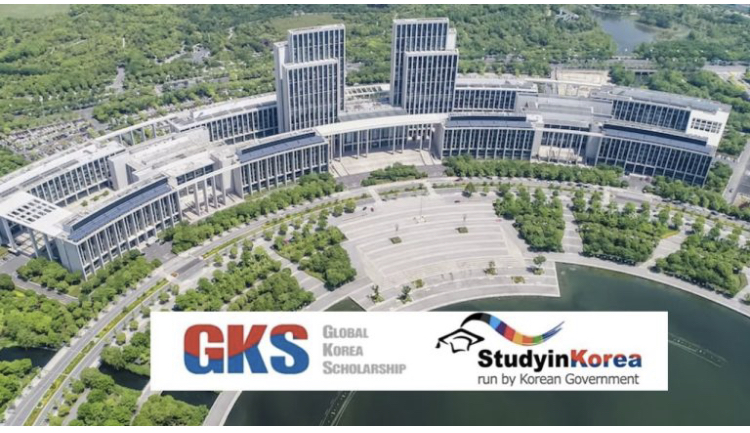
Apply now for the 2026 Global Korea Scholarship (GKS) For Undergraduates in Korea. FULLY FUNDED!!
The Global Korea Scholarship (GKS) offers international students a chance to pursue academic degrees at Korean universities. This prestigious scholarship, funded by the Korean government, provides comprehensive support including:
- *Full Tuition Coverage*: Tuition fees are fully covered by the scholarship.
- *Monthly Living Stipend*: A generous stipend of 900,000 KRW per month to support living expenses.
- *Airfare*: Flight costs to and from Korea are covered.
- *Accommodation*: Support for housing arrangements.
Additional Information
Program Type
Fully Funded
Program Benefits
## Global Korea Scholarship (GKS) Program Benefits
The Global Korea Scholarship offers numerous benefits to international students pursuing higher education in Korea.
- *Full Tuition Waiver*: Covers entire tuition fees for degree programs at participating Korean universities.
- *Monthly Stipend*: 900,000 KRW per month for living expenses, supporting students' daily needs.
- *Round-Trip Airfare*: Covers economy class flight costs to and from Korea.
- *Accommodation Support*: Assistance with housing arrangements, often provided by the host university.
- *Medical Insurance*: Coverage for health insurance during the study period.
- *Korean Language Training*: Often includes pre-academic Korean language program to prepare students.
- *Cultural Experience*: Opportunity to experience Korea's rich culture and society.
- *Networking Opportunities*: Connect with Korean students, scholars, and international peers.
## Academic Opportunities
- *Undergraduate and Graduate Degrees*: Support for various degree levels at Korean universities.
- *Research Opportunities*: Chance to engage in cutting-edge research in diverse fields.
- *University Partnerships*: Collaboration with prestigious Korean universities.
## Goals of GKS
- *International Cooperation*: Enhance educational exchange and mutual understanding.
- *Global Talent Development*: Foster international students' academic and professional growth.
The Global Korea Scholarship offers numerous benefits to international students pursuing higher education in Korea.
- *Full Tuition Waiver*: Covers entire tuition fees for degree programs at participating Korean universities.
- *Monthly Stipend*: 900,000 KRW per month for living expenses, supporting students' daily needs.
- *Round-Trip Airfare*: Covers economy class flight costs to and from Korea.
- *Accommodation Support*: Assistance with housing arrangements, often provided by the host university.
- *Medical Insurance*: Coverage for health insurance during the study period.
- *Korean Language Training*: Often includes pre-academic Korean language program to prepare students.
- *Cultural Experience*: Opportunity to experience Korea's rich culture and society.
- *Networking Opportunities*: Connect with Korean students, scholars, and international peers.
## Academic Opportunities
- *Undergraduate and Graduate Degrees*: Support for various degree levels at Korean universities.
- *Research Opportunities*: Chance to engage in cutting-edge research in diverse fields.
- *University Partnerships*: Collaboration with prestigious Korean universities.
## Goals of GKS
- *International Cooperation*: Enhance educational exchange and mutual understanding.
- *Global Talent Development*: Foster international students' academic and professional growth.
Eligibility Criteria
## Eligibility Criteria for Global Korea Scholarship (GKS)
1. *Nationality*: Applicants must be non-Korean citizens.
2. *Age*: Typically applicants should be under a certain age limit (varies by program type).
3. *Academic Qualifications*:
- *Undergraduate*: Applicants should have completed secondary education.
- *Graduate*: Bachelor's degree required for master's applicants; master's degree for doctoral applicants.
4. *Academic Performance*: Strong academic record often required.
5. *Language Proficiency*:
- *Korean Track*: Proficiency in Korean (TOPIK level often required).
- *English Track*: English proficiency (TOEFL, IELTS) for programs taught in English.
6. *Health*: Applicants must be in good health.
7. *Application through Channels*: GKS applications often accepted through Korean embassies/consulates or universities.
## Types of GKS
- *GKS Undergraduate*: For bachelor's degree programs.
- *GKS Graduate*: For master's or doctoral degree programs.
- *Research Scholars*: For researchers.
## Additional Considerations
- *Country-Specific Quotas*: Some countries have specific quotas or requirements.
- *Program Availability*: Availability of programs and universities can vary.
- *Selection Process*: Competitive selection based on academic merit, language skills, and other criteria.
## Notes
- Eligibility criteria can vary depending on the specific GKS program and host university.
- Check with Korean embassy/consulate or NIIED (National Institute for International Education) for latest requirements.
1. *Nationality*: Applicants must be non-Korean citizens.
2. *Age*: Typically applicants should be under a certain age limit (varies by program type).
3. *Academic Qualifications*:
- *Undergraduate*: Applicants should have completed secondary education.
- *Graduate*: Bachelor's degree required for master's applicants; master's degree for doctoral applicants.
4. *Academic Performance*: Strong academic record often required.
5. *Language Proficiency*:
- *Korean Track*: Proficiency in Korean (TOPIK level often required).
- *English Track*: English proficiency (TOEFL, IELTS) for programs taught in English.
6. *Health*: Applicants must be in good health.
7. *Application through Channels*: GKS applications often accepted through Korean embassies/consulates or universities.
## Types of GKS
- *GKS Undergraduate*: For bachelor's degree programs.
- *GKS Graduate*: For master's or doctoral degree programs.
- *Research Scholars*: For researchers.
## Additional Considerations
- *Country-Specific Quotas*: Some countries have specific quotas or requirements.
- *Program Availability*: Availability of programs and universities can vary.
- *Selection Process*: Competitive selection based on academic merit, language skills, and other criteria.
## Notes
- Eligibility criteria can vary depending on the specific GKS program and host university.
- Check with Korean embassy/consulate or NIIED (National Institute for International Education) for latest requirements.
Application Procedure
## Application Procedure for Global Korea Scholarship (GKS)
1. *Check Eligibility*: Ensure you meet GKS eligibility criteria for nationality, academics, language proficiency.
2. *Choose Program*: Select undergraduate or graduate program at a Korean university participating in GKS.
3. *Application Method*: Apply through:
- *Korean Embassy/Consulate*: In your home country often via designated application portal.
- *University Direct Application*: Some universities handle applications directly.
4. *Required Documents*: Typically include:
- Application form
- Academic transcripts/certificates
- Language proficiency proof (TOPIK for Korean; TOEFL/IELTS for English tracks)
- Passport copy
- Health certificate
- Letters of recommendation (may be required)
5. *Submission Deadline*: Check deadlines with Korean embassy/consulate or NIIED; often varies by country.
6. *Selection Process*:
- *Document Review*: Initial screening of applications.
- *Interviews*: May be conducted by embassy or university.
7. *Notification*: Successful applicants notified by embassy or NIIED.
8. *Visa Application*: Scholarship recipients apply for D-2 student visa.
## Key Organizations
- *NIIED (National Institute for International Education)*: Manages GKS program.
- *Korean Embassies/Consulates*: Handle applications in many countries.
## Additional Aspects
- *Language Preparation*: Korean language proficiency (TOPIK) often required; some English-taught programs.
- *University Placement*: Scholarship includes placement at a participating Korean university.
- *Pre-departure Orientation*: Often provided for awardees..
1. *Check Eligibility*: Ensure you meet GKS eligibility criteria for nationality, academics, language proficiency.
2. *Choose Program*: Select undergraduate or graduate program at a Korean university participating in GKS.
3. *Application Method*: Apply through:
- *Korean Embassy/Consulate*: In your home country often via designated application portal.
- *University Direct Application*: Some universities handle applications directly.
4. *Required Documents*: Typically include:
- Application form
- Academic transcripts/certificates
- Language proficiency proof (TOPIK for Korean; TOEFL/IELTS for English tracks)
- Passport copy
- Health certificate
- Letters of recommendation (may be required)
5. *Submission Deadline*: Check deadlines with Korean embassy/consulate or NIIED; often varies by country.
6. *Selection Process*:
- *Document Review*: Initial screening of applications.
- *Interviews*: May be conducted by embassy or university.
7. *Notification*: Successful applicants notified by embassy or NIIED.
8. *Visa Application*: Scholarship recipients apply for D-2 student visa.
## Key Organizations
- *NIIED (National Institute for International Education)*: Manages GKS program.
- *Korean Embassies/Consulates*: Handle applications in many countries.
## Additional Aspects
- *Language Preparation*: Korean language proficiency (TOPIK) often required; some English-taught programs.
- *University Placement*: Scholarship includes placement at a participating Korean university.
- *Pre-departure Orientation*: Often provided for awardees..
Popular
New
Popular
Popular
Popular

Popular

Popular
Popular
Apply now for the 2026 Global Korea Scholarship (GKS) For Undergraduates in Korea. FULLY FUNDED!! 0 reviews
Login to Write Your ReviewThere are no reviews yet.
